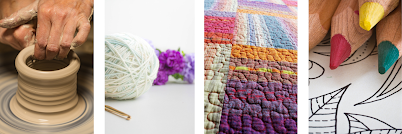
Showing posts with label reduce stress. Show all posts

Saturday

Guided imagery for kids with chronic illness or sensory sensitivities

Guided imagery for kids

Guided imagery can be especially powerful for children who feel overwhelmed by medical procedures, pain, or emotional stress. It gives them a sense of agency and comfort, even when their bodies feel out of control.

Guided imagery can be a beautiful, empowering tool for children—especially those navigating pain, anxiety, or sensory overwhelm. Here’s a gentle overview tailored for kids and the adults who support them:

Guided Imagery for Kids: A Gentle Introduction

What is it?

Guided imagery is like storytelling for the body and mind. Children are invited to imagine calming scenes—like floating on a cloud, walking through a magical forest, or cuddling with a friendly animal—to help their bodies relax and their minds feel safe.

Why is it helpful?

  • Pain relief: Helps kids shift focus away from discomfort (e.g., muscle aches, headaches, or growing pains)

  • Emotional regulation: Eases anxiety, sadness, or overstimulation

  • Confidence building: Encourages self-esteem through affirming imagery and phrases

  • Sleep support: Creates a soothing bedtime routine that helps kids wind down

How can kids practice it?

  • Audio recordings: Gentle voice-led meditations with music

  • Parent-led scripts: Read aloud calming stories or visualizations

  • Self-guided imagination: Encourage kids to “build” their own safe place in their mind

You can explore nearly 50 free child-friendly scripts on Green Child Magazine—including favorites like The Sleepy Seahorse, Peaceful Butterfly, and The Thankful Turtle.

Sample Script Snippet

“You’re walking through a quiet forest. The leaves whisper gently as you pass. A wise turtle greets you and offers a glowing stone that makes your body feel warm and strong…”

Guided imagery for children


Wednesday

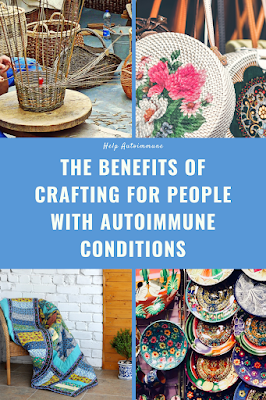
The benefits of crafting for people with autoimmune conditions

There are many reasons why crafting is beneficial for people with autoimmune disease and in fact all chronic illnesses. Here I uncover some of the research which confirms what many crafters feel when they do their favorite pastime whether it is drawing, pottery, baking, scrapbooking, quilting, rock painting or whatever craft takes their fancy. 

The benefits of crafting for people with autoimmune conditions

Crafting for many people is an enjoyable or relaxing experience and it may be associated with a freedom of expression and a sense of achievement.

Crafting is good for your mental health. Art therapists have known this for years. Their whole field is based upon the benefits of any form of art being beneficial in so many ways. A wide variety of studies have been done now to provide an understanding of these benefits. Some of the results have proven that:

It can be a distraction from pain.

It can decrease anxiety, stress, and mood disturbances which are often felt by people with chronic conditions.

It can improve well-being and quality of life.

It can activate the reward pathways in the brain providing a sense of satisfaction.

RESEARCH INTO THE BENEFITS OF CRAFTING

A US university study even measured 39 participants' cortisol levels to monitor their stress from a session of creative crafting like collage and found a significant lowering of cortisol levels which means they were less stressed.

One studyTrusted Source found that people who engaged in arts and crafts, such as music, painting, drawing, textile crafts, and creative writing experienced lower levels of mental distress. They also experienced higher levels of mental functioning and life satisfaction.

The findings of this study illustrate how creative craft hobbies such as quilting can be a meaningful vehicle for enhancing wellbeing. This study sets the foundation for further research into creativity, creative hobbies, and hobbies in general. A range of cognitive, emotional, and social benefits were uncovered that participants attributed to quilting that could be seen by all crafts.

A 2018 study shows that crafting is calming, promotes successful aging, and has long-term social and cultural benefits. Researchers found four factors common in their older crafting community: (1) identity, (2) spirituality, (3) calming and (4) mastery/recognition from others led to less decline in everyday functioning and independence among older adults.

A study into the simple act of doodling proved that it aided concentration, improved visuomotor learning, and decreased boredom. Ways of maintaining attention to task are also important in the context of depressive ruminations and worry.

Many people, with autoimmune conditions, have found that they now have reduced skills such as fine motor hand skills or eye problems and they may need to change or modify their hobbies. I personally use to do fine and detailed etching in metal but have changed to coloring due to decreased hand strength. I still enjoy having an activity that I can do that provides me with a sense of creativity and distraction from my symptoms. A friend was telling me she use to do pottery but now due to limited space and the inability to drive to the local kiln to have her pots fired, she has swapped to polymer clay which can do at home. 

MAKING CRAFTING EASIER

Pastel or charcoal drawing using larger crayons may be easier when you have lost dexterity in your hands. 

Collage creations with torn paper and glue sticks rather than using scissors.

Create art, as simple as dots, on pre-cut cards and envelope sets. The same can be done on blank postcards. 

A table easel may make painting or drawing more accessible but it is a matter of personal preference.

Large crayons and triangular colored pencils designed for easy grip by children may help some people with dexterity or strength issues.

Some people like painting on material rather than paper. 


QUESTIONS ABOUT CRAFTING FOR YOU

Are you someone who loves crafting and feel that they gain great benefits in having a hobby or passion that you enjoy? It would be wonderful if you could tell us what hobby you enjoy and a bit about it in the comments. Thank you.

Are you someone that has always been a crafter and has had to modify the way they craft or the type of crafts they do? We would love to hear from you too. 

SOURCES MENTIONED:

The benefits of crafting for people with autoimmune conditions


Friday

Yoga can help relieve MS symptoms


Yoga and the immune system
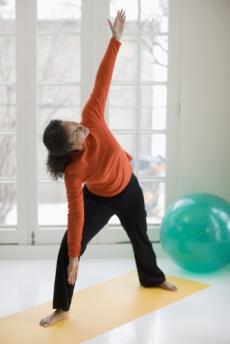
I want to share how yoga can help you manage your MS symptoms. If you are struggling with fatigue learning just the deep breathing techniques alone will turn on your body’s natural relaxation response and oxygenate your blood more fully. When you consciously breathe more deeply through the practice of yoga you will feel calm and relaxed but at the same time energized. In addition, when you add yoga postures that move your body you will have less muscle spasticity and increased muscle strength leading to greater balance. 
A recent study conducted by Evan Cohen and David Kietrys, physical therapists and associate professors in the School of Health Related Professions at Stratford showed the following results: "…at the end of an eight-week trial those who participated were better able to walk for short distances and longer periods of time, had better balance while reaching backwards, fine motor coordination, and were better able to go from sitting to standing. Their quality of life also improved in perceived mental health, concentration, bladder control, walking, and vision, with a decrease in pain and fatigue." These findings were presented on September 26 at the Symposium on Yoga Research at the Kripalu Institute in Massachusetts. "This study, I hope, is one of many that will give us the clinical information we need," said Fogerite. "Yoga is not currently being widely prescribed for people with MS, although it might turn out to be a very helpful treatment."

One of the study participants had the following to say about her experience…

"What was so nice about this experience was that although everyone was at a different level of the disease, we felt like we were all together, so I think the camaraderie helped," said Meltzer. "And it wasn’t just about gaining more mobility and balance in our legs but our arms and necks felt stronger as well."

I have MS myself and yoga is a big part of why I am so mobile and strong in my body. I want to share yoga with everyone I know, but especially those people with MS, because it can change their lives. I offer several chair yoga classes and also work one on one with people to help them develop a home practice. If you are interested in learning more feel free to contact me at janetgolow@gmail.com.

WRITTEN BY GUEST WRITER:
Janet Golownia RYT, PYT, Certified Health Coach

Janet Golownia is passionate about unlocking the body’s ability to heal itself through a variety of yoga tools and nutrition.  She has learned from healing her own health issues of hypothyroidism, depression and multiple sclerosis that healing takes place not only on the physical level but also the energetic and emotional levels.  As a Yoga Therapist and Certified Health coach she will develop a personalized plan of healing for each client based upon their goals.  Some of the many benefits experienced by her clients are relief of chronic pain, greater core strength, increased flexibility and range of motion, greater body awareness and mental clarity.

Read more about Janet's personal story and mission with health 

Thursday

Sleep and disease

Sleep is essential for good health.

The Relationship Between Sleep and Health
What many people do not realize is that a lack of sleep—especially on a regular basis—is associated with long-term health consequences, including chronic medical conditions like diabetes, high blood pressure, and heart disease, and that these conditions may lead to...Read full article

Raising awareness of sleep health: many topics at Sleep Health FOUNDATION
Getting the Sleep You Need at Division of Sleep Medicine at Harvard Medical School