Showing posts with label exercise. Show all posts

Wednesday

Just 20 minutes of exercise to reduce inflammation

Just 20 minutes of exercise to reduce inflammation
As little as 20 minutes of exercise could have anti-inflammatory effects, according to this study.

Research, published in the journal Brain, Behavior and Immunity, investigates the benefits of 20-minute exercise sessions on the body's immune system.


Researchers from the University of California-San Diego School of Medicine - led by Suzi Hong, Ph.D., from the Department of Psychiatry and the Department of Family Medicine and Public Health - hypothesized that exercise would improve the body's anti-inflammatory response by activating the sympathetic nervous system.
The sympathetic nervous system helps to increase heart rate, blood pressure, and breathing rate. Physical exercise activates this system to help the body keep up.
During this time, the body releases hormones such as epinephrine and norepinephrine into the bloodstream, which activate the adrenergic receptors of immune cells.

Analyzing the body's immune response to exercise

More specifically, the researchers tested the hypothesis that a single 20-minute session of exercise would be enough to trigger sympathoadrenergic activation, which, in turn, would suppress the production of monocytic cytokines.
Monocytes are a type of white blood cell, or immune cell, that help to fight off bacteria and infections. Cytokines are a type of protein that help other cells to become so-called effector cells, which, in turn, kill off cancerous or infected cells.
TNF is one of these cytokines. TNF can induce cell differentiation and proliferation, but also cell death, including cancerous ones. TNF also has pro-inflammatory properties, which help the body to bring its inflammatory cells to the site of the injury, creating an immunological response.
Inflammation is a necessary part of the body's immune response, but too much inflammation can lead to disease. Chronic inflammation may contribute to diabetes, obesity, celiac disease, arthritis, fibromyalgia, or bowel diseases such as Crohn's disease or ulcerative colitis.
To test their hypothesis, the researchers asked 47 participants to walk on a treadmill for 20 minutes at an intensity rate adjusted to suit each individual's fitness level. Hong and team took blood samples from the participants both before and immediately after the exercise sessions.

As little as 20 minutes of exercise reduces inflammation

The results revealed that a 20-minute session of moderate exercise can have anti-inflammatory effects.
The study confirmed the researchers' hypothesis. Exercise did seem to produce an anti-inflammatory cellular response, which could be seen in the reduction of the cytokine TNF.
"Our study shows a workout session does not actually have to be intense to have anti-inflammatory effects. Twenty minutes to half an hour of moderate exercise, including fast walking, appears to be sufficient. Feeling like a workout needs to be at a peak exertion level for a long duration can intimidate those who suffer from chronic inflammatory diseases and could greatly benefit from physical activity." - Suzi Hong
FULL ARTICLE

Friday

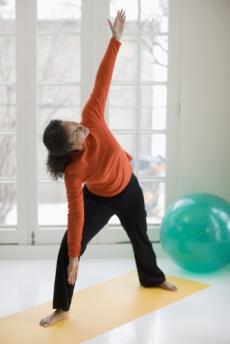
Yoga can help relieve MS symptoms


Yoga and the immune system
I want to share how yoga can help you manage your MS symptoms. If you are struggling with fatigue learning just the deep breathing techniques alone will turn on your body’s natural relaxation response and oxygenate your blood more fully. When you consciously breathe more deeply through the practice of yoga you will feel calm and relaxed but at the same time energized. In addition, when you add yoga postures that move your body you will have less muscle spasticity and increased muscle strength leading to greater balance. 
A recent study conducted by Evan Cohen and David Kietrys, physical therapists and associate professors in the School of Health Related Professions at Stratford showed the following results: "…at the end of an eight-week trial those who participated were better able to walk for short distances and longer periods of time, had better balance while reaching backwards, fine motor coordination, and were better able to go from sitting to standing. Their quality of life also improved in perceived mental health, concentration, bladder control, walking, and vision, with a decrease in pain and fatigue." These findings were presented on September 26 at the Symposium on Yoga Research at the Kripalu Institute in Massachusetts. "This study, I hope, is one of many that will give us the clinical information we need," said Fogerite. "Yoga is not currently being widely prescribed for people with MS, although it might turn out to be a very helpful treatment."

One of the study participants had the following to say about her experience…

"What was so nice about this experience was that although everyone was at a different level of the disease, we felt like we were all together, so I think the camaraderie helped," said Meltzer. "And it wasn’t just about gaining more mobility and balance in our legs but our arms and necks felt stronger as well."

I have MS myself and yoga is a big part of why I am so mobile and strong in my body. I want to share yoga with everyone I know, but especially those people with MS, because it can change their lives. I offer several chair yoga classes and also work one on one with people to help them develop a home practice. If you are interested in learning more feel free to contact me at janetgolow@gmail.com.

WRITTEN BY GUEST WRITER:
Janet Golownia RYT, PYT, Certified Health Coach

Janet Golownia is passionate about unlocking the body’s ability to heal itself through a variety of yoga tools and nutrition.  She has learned from healing her own health issues of hypothyroidism, depression and multiple sclerosis that healing takes place not only on the physical level but also the energetic and emotional levels.  As a Yoga Therapist and Certified Health coach she will develop a personalized plan of healing for each client based upon their goals.  Some of the many benefits experienced by her clients are relief of chronic pain, greater core strength, increased flexibility and range of motion, greater body awareness and mental clarity.

Read more about Janet's personal story and mission with health 

Get up off the lounge

"Exercise increases circulation and helps regulate the immune system and hormones that influence the healing process." Charles Emery, an American professor of psychology.
'Nuf said. Leave the computer now and walk outside.